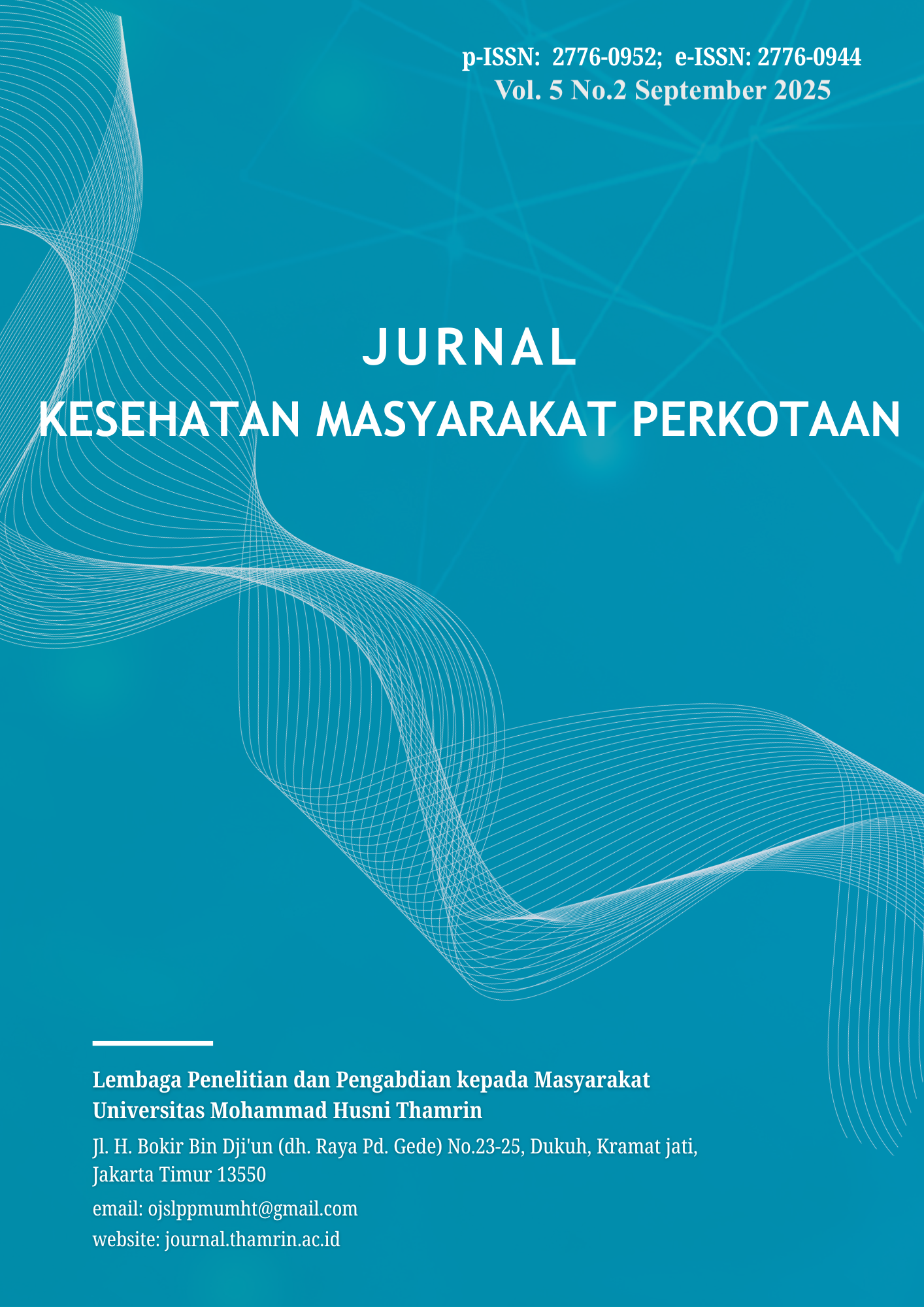
Measuring the Dietary Diversity of Pregnant Women in the Warunggunung Community Health Center Work Area
DOI:
https://doi.org/10.37012/jkmp.v5i2.3180Abstract
Pregnancy is a critical period that requires optimal nutritional intake to support maternal health and fetal growth and development. Inadequate nutritional intake can lead to various health problems such as anemia, chronic energy deficiency (CED), low birth weight (LBW), impaired brain development, and the risk of other pregnancy complications. Unbalanced and low-diversity food consumption patterns can increase the risk of anemia, chronic energy deficiency, and other pregnancy complications. This study aims to describe the nutritional adequacy and dietary diversity of pregnant women in the Warunggunung Community Health Center working area based on the percentage of the Recommended Dietary Allowance (RDA). The study used a quantitative descriptive design with data collection through a Semi-Quantitative Food Frequency Questionnaire (SQ-FFQ) and intake analysis using NutriSurvey. The results showed that most micronutrients such as vitamin A, vitamin B complex, and vitamin C were met, while energy and magnesium sufficiency were still low in the majority of respondents. The distribution of dietary diversity showed that 54.7% of pregnant women were in the good category, while 45.3% had not achieved adequate dietary diversity. These findings underscore the importance of interventions to improve dietary patterns through nutrition education, increased access to nutritious food, and ongoing nutritional status monitoring. Efforts to improve the diet quality of pregnant women are essential to support maternal and fetal health and prevent the risk of pregnancy complications.
Downloads
Published
How to Cite
Issue
Section
Citation Check
License
Copyright (c) 2025 Brian Sri Prahastuti, Lilis Heri Mis Cicih, Neng Susilawati

This work is licensed under a Creative Commons Attribution 4.0 International License.
Jurnal Kesehatan Masyarakat Perkotaan allows readers to read, download, copy, distribute, print, search, or link to the full texts of its articles and allow readers to use them for any other lawful purpose. The journal allows the author(s) to hold the copyright without restrictions. Finally, the journal allows the author(s) to retain publishing rights without restrictions Authors are allowed to archive their submitted article in an open access repository Authors are allowed to archive the final published article in an open access repository with an acknowledgment of its initial publication in this journal.

Lisensi Creative Commons Atribusi 4.0 Internasional.