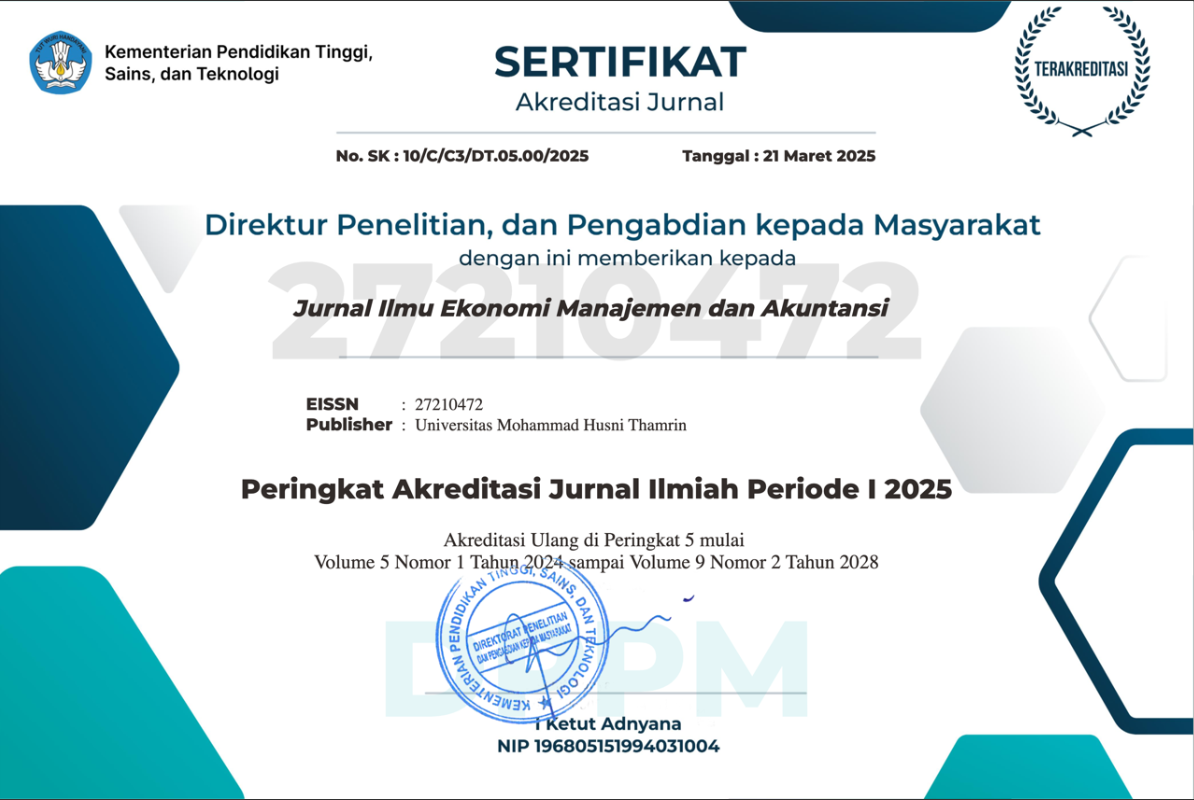
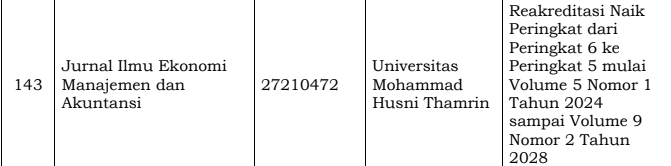
The Influence of Physical Workload, Mental Workload, and Shift Work on Employee Performance Through Job Stress as a Mediating Variable at Hotel Grand Bydiel Cianjur
DOI:
https://doi.org/10.37012/ileka.v7i2.3947Abstract
The hospitality industry requires readiness of human resources to deliver fast, accurate, and consistent service, so that job demands may increase the pressure experienced by employees. This study aims to analyze the effect of physical workload, mental workload, and shift work on employee performance through job stress as a mediating variable among employees of Hotel Grand Bydiel Cianjur. A quantitative method with a causal-associative approach was used, involving 109 employees selected through a saturated sampling technique. Data were analyzed using Structural Equation Modeling based on Partial Least Square (SEM-PLS) with SmartPLS 3. The results show that physical workload has a positive and significant effect on employee performance but no significant effect on job stress. Mental workload has a negative and significant effect on job stress but no significant effect on employee performance. Shift work has a positive and significant effect on both employee performance and job stress. Job stress has no significant effect on employee performance and does not mediate the effect of the three independent variables on employee performance. Hotel management is advised to continuously evaluate workload distribution, shift scheduling, and employee stress management.
Downloads
Published
Issue
Section
Citation Check
License
Copyright (c) 2026 Ita Citra Putriya Ningsih, Helena Louise Panggabean, Ependi

This work is licensed under a Creative Commons Attribution 4.0 International License.
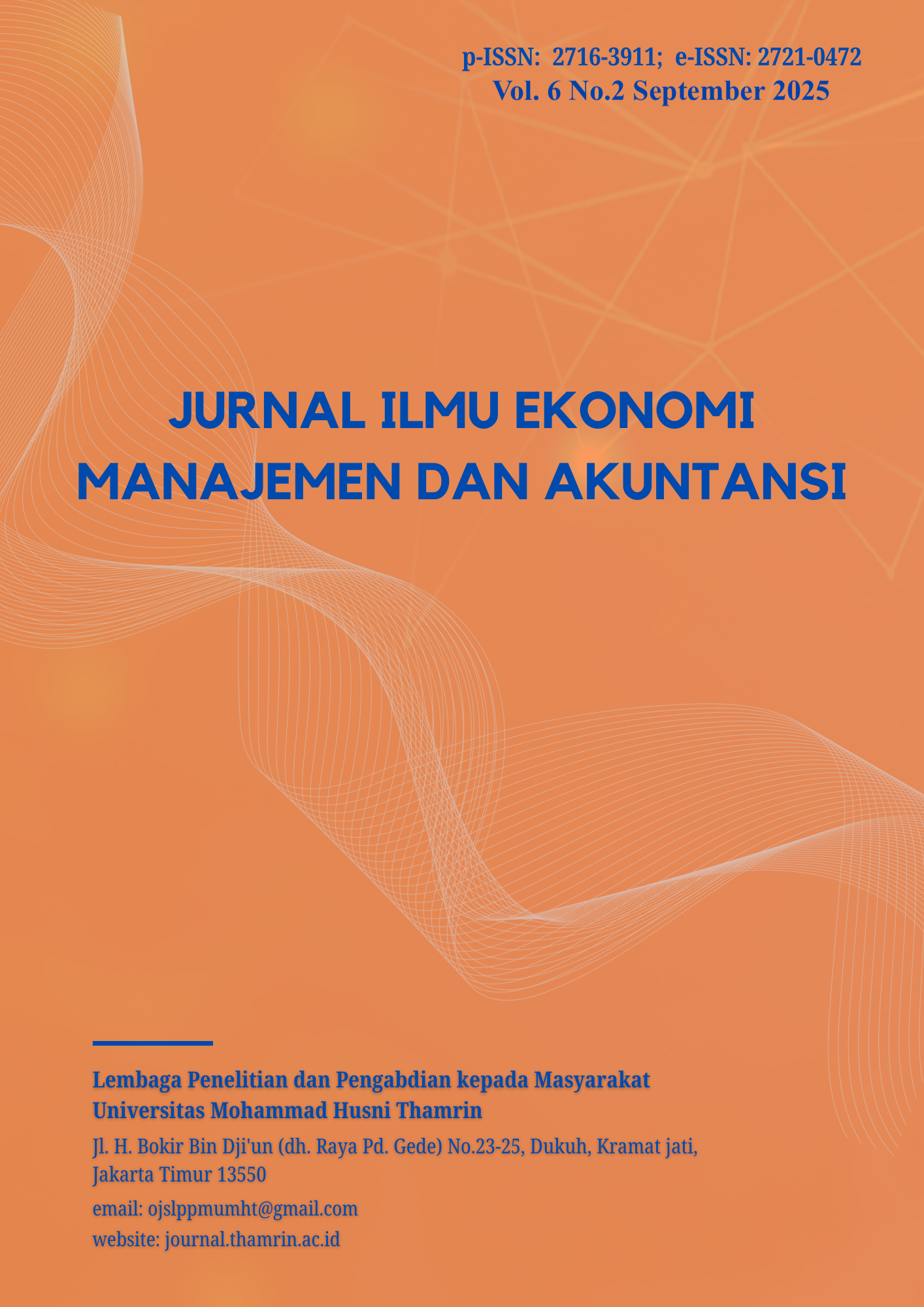
Jurnal Ilmu Ekonomi Manajemen dan Akuntansi (ILEKA) Universitas Mohammad Husni Thamrin allows readers to read, download, copy, distribute, print, search, or link to the full texts of its articles and allow readers to use them for any other lawful purpose. The journal allows the author(s) to hold the copyright without restrictions. Finally, the journal allows the author(s) to retain publishing rights without restrictions Authors are allowed to archive their submitted article in an open access repository Authors are allowed to archive the final published article in an open access repository with an acknowledgment of its initial publication in this journal.

Jurnal Ilmu Ekonomi Manajemen Akuntansi (ILEKA) Mohammad Husni Thamrin is licensed under a Creative Commons Attribution 4.0 International License.