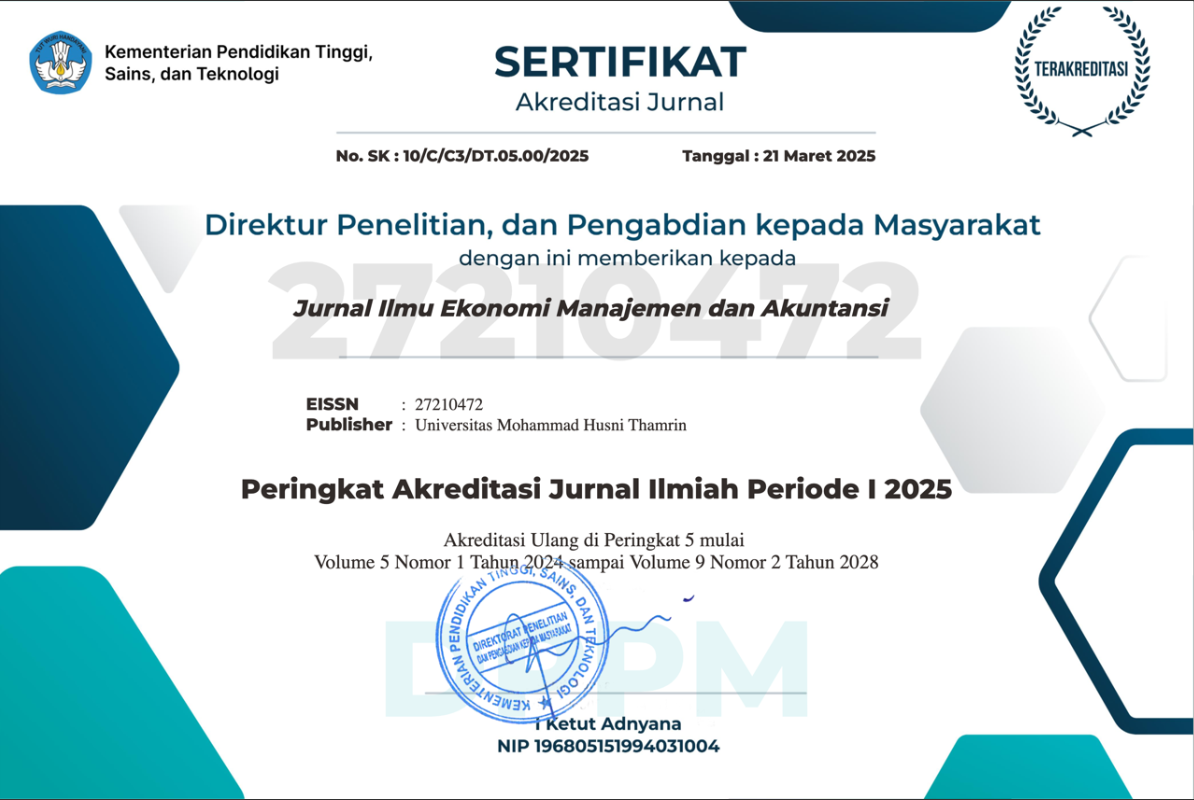
Evaluation of Internal Control in Inventory Management to Improve Effectiveness in Inventory Management (Case Study at Oharang Restaurant Cimahi Branch)
DOI:
https://doi.org/10.37012/ileka.v7i1.3360Abstract
The food and beverage industry in Indonesia is growing rapidly, increasing competition and requiring restaurants to manage data appropriately, especially in inventory management as a crucial asset that supports smooth operations. Poorly managed inventory risks understocking or overstocking, necessitating adequate internal controls. This study aims to evaluate the effectiveness of internal controls in inventory management at the Oharang Restaurant, Cimahi Branch, using the COSO Enterprise Risk Management (ERM) framework and to provide recommendations for improvement. The research method used is descriptive analytical with a qualitative approach through primary and secondary data collection. Primary data were obtained through semi-structured interviews with the owner, manager, supervisor, and staff, as well as direct observation, while secondary data were obtained through inventory report documentation, company documents, and organizational structures. The results of the study indicate that internal controls are not fully adequate, especially in the control activities component, which includes weaknesses in the separation of functions, completeness of transaction documentation, authorization formalities, and inventory recording. Based on these findings, recommendations proposed include adding operational supervisors, preparing more detailed job descriptions, and implementing standard documents such as purchase orders, receiving reports, material requisitions, and stock cards to strengthen internal controls and improve the effectiveness of inventory management on an ongoing basis. It is hoped that the research findings can be the basis for improvements that support operational effectiveness and smoothness.
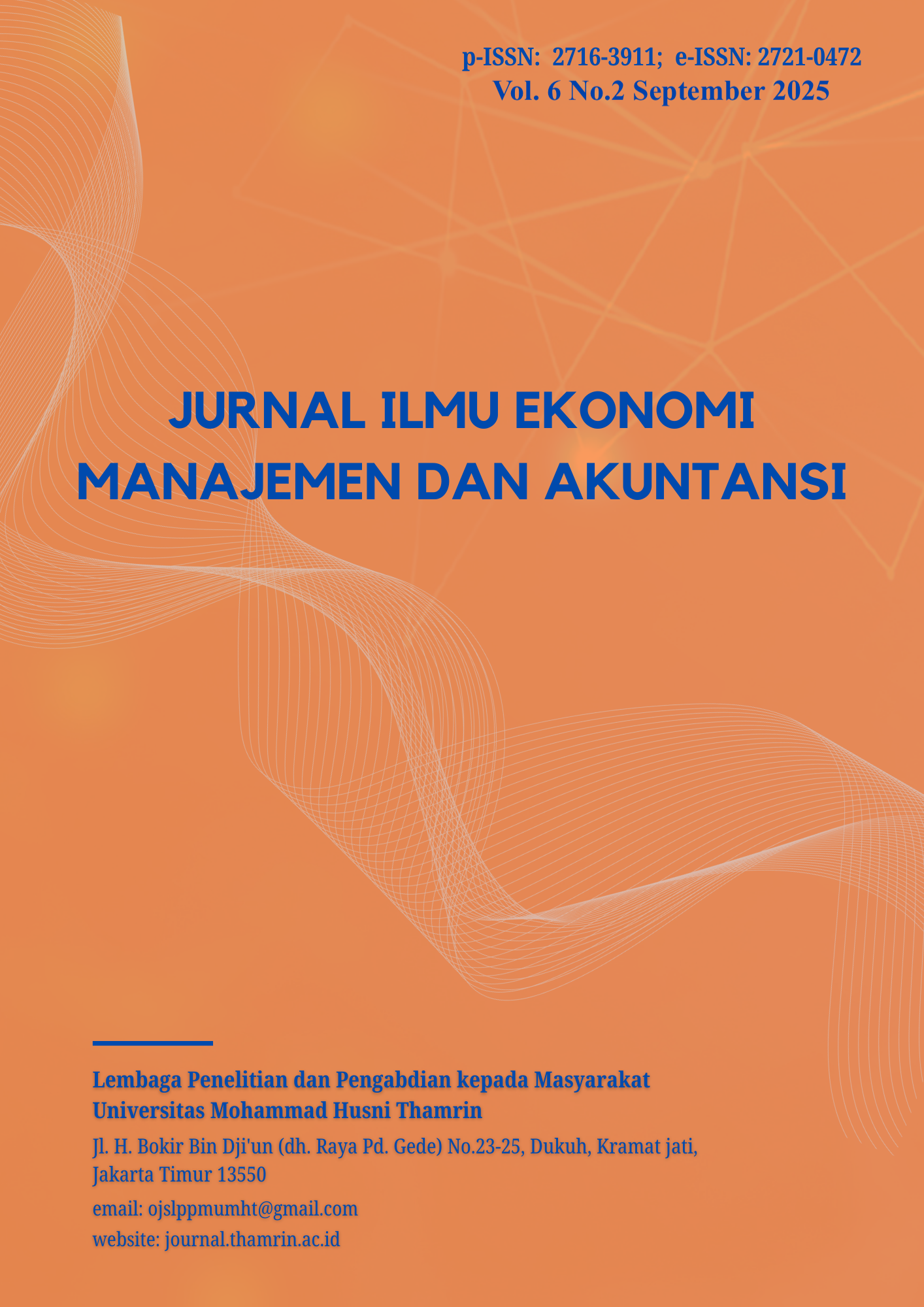
Downloads
Published
Issue
Section
Citation Check
License
Copyright (c) 2026 Angelique Ruth Tiurmauli Tobing, Monica Paramita Ratna Putri Dewi

This work is licensed under a Creative Commons Attribution 4.0 International License.
Jurnal Ilmu Ekonomi Manajemen dan Akuntansi (ILEKA) Universitas Mohammad Husni Thamrin allows readers to read, download, copy, distribute, print, search, or link to the full texts of its articles and allow readers to use them for any other lawful purpose. The journal allows the author(s) to hold the copyright without restrictions. Finally, the journal allows the author(s) to retain publishing rights without restrictions Authors are allowed to archive their submitted article in an open access repository Authors are allowed to archive the final published article in an open access repository with an acknowledgment of its initial publication in this journal.

Jurnal Ilmu Ekonomi Manajemen Akuntansi (ILEKA) Mohammad Husni Thamrin is licensed under a Creative Commons Attribution 4.0 International License.