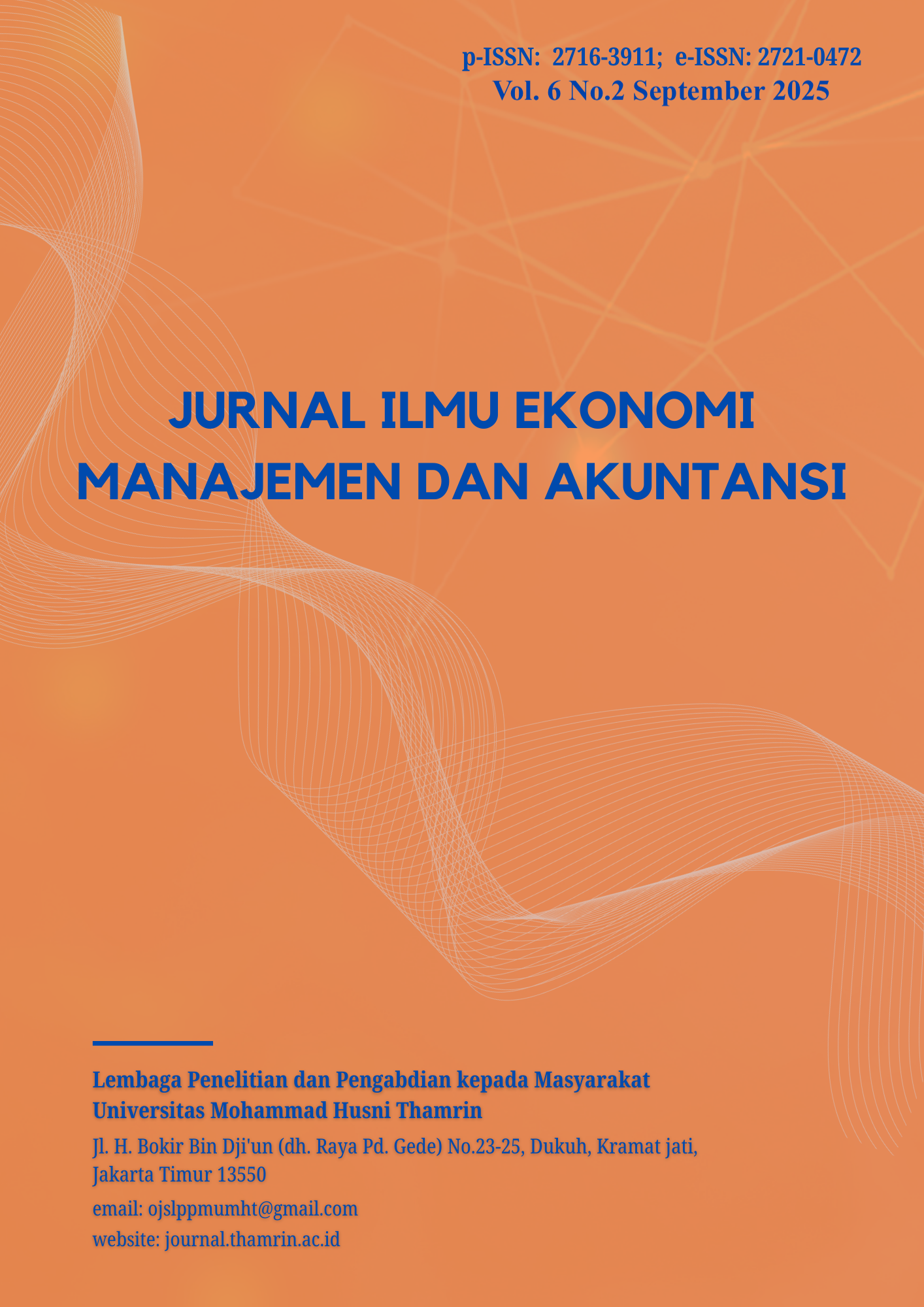
The Influence of Servant Leadership Style and Digital Organizational Culture on Strengthening Work Ethic and Employee Performance at RSAR Cileungsi
DOI:
https://doi.org/10.37012/ileka.v7i1.3324Abstract
Healthcare services demand high levels of accuracy, responsiveness, and collaboration because they directly relate to patient safety and public trust. In Indonesia, hospitals are encouraged to strengthen governance, service quality, and the use of health information technology, making leadership, digital organizational culture, and work ethic crucial performance factors. This study aims to analyze the influence of servant leadership and digital organizational culture on strengthening work ethic and employee performance at Dr. Abdul Radjak Hospital (RSAR) Cileungsi. The background of the study is based on frequent leadership changes (5 times in the 2020-2025 period), low implementation of digital culture, and declining work ethic and high employee turnover. The research method used a quantitative approach with a random survey technique through the distribution of questionnaires with a Likert scale to 115 respondents from a population of 160 permanent employees of RSAR Cileungsi who have worked for more than 10 years. Data analysis used SEM PLS version 4 (Structural Equation Modeling with Partial Least Squares). The results showed that servant leadership had a significant positive effect on digital organizational culture (69.5%), while its effect on work ethic and employee performance was insignificant. Work ethic was shown to have a significant positive effect on employee performance (78.7%). Together, servant leadership and digital organizational culture had a significant positive effect on employee performance (47.3%).
Downloads
Published
Issue
Section
Citation Check
License
Copyright (c) 2026 Albert Yansen, Dewa Kadeq Wista, Chairul Hakim

This work is licensed under a Creative Commons Attribution 4.0 International License.
Jurnal Ilmu Ekonomi Manajemen dan Akuntansi (ILEKA) Universitas Mohammad Husni Thamrin allows readers to read, download, copy, distribute, print, search, or link to the full texts of its articles and allow readers to use them for any other lawful purpose. The journal allows the author(s) to hold the copyright without restrictions. Finally, the journal allows the author(s) to retain publishing rights without restrictions Authors are allowed to archive their submitted article in an open access repository Authors are allowed to archive the final published article in an open access repository with an acknowledgment of its initial publication in this journal.

Jurnal Ilmu Ekonomi Manajemen Akuntansi (ILEKA) Mohammad Husni Thamrin is licensed under a Creative Commons Attribution 4.0 International License.