A Fiqh al-Siyasah Analysis of the Implementation of Article 26(4) of Law No. 6 of 2014 on the Responsibilities of Village (A case study in Banjar Negeri Village, South Lampung Regency)
DOI:
https://doi.org/10.37012/jpkmht.v8i1.3512Abstract
This study aims to analyze the implementation of village head authority based on Article 26 of Law No. 6 of 2014 in Banjar Negeri Village, South Lampung, and review it from the perspective of Fiqih Siyasah. The research method used is qualitative field research with a normative-empirical approach. Data collection was conducted through observation, interviews, and documentation related to village governance. The results of the study show that the implementation of the Village Head's authority in the physical development and community empowerment sectors has been carried out in accordance with regulations, but still faces significant obstacles in terms of budget transparency and accountability. From the perspective of Fiqh Siyasah, the leadership pattern in Banjar Negeri Village is structurally in line with the concept of Siyasah Dusturiyah, which regulates the relationship between leaders and the people. However, substantively, the practice of governance still needs to be strengthened in terms of the principles of Amanah (integrity) and Syura (inclusive deliberation). This is crucial to ensure that every policy taken truly leads to the optimal and equitable achievement of the public interest (Al-Maslahah al-Ammah) for all villagers.
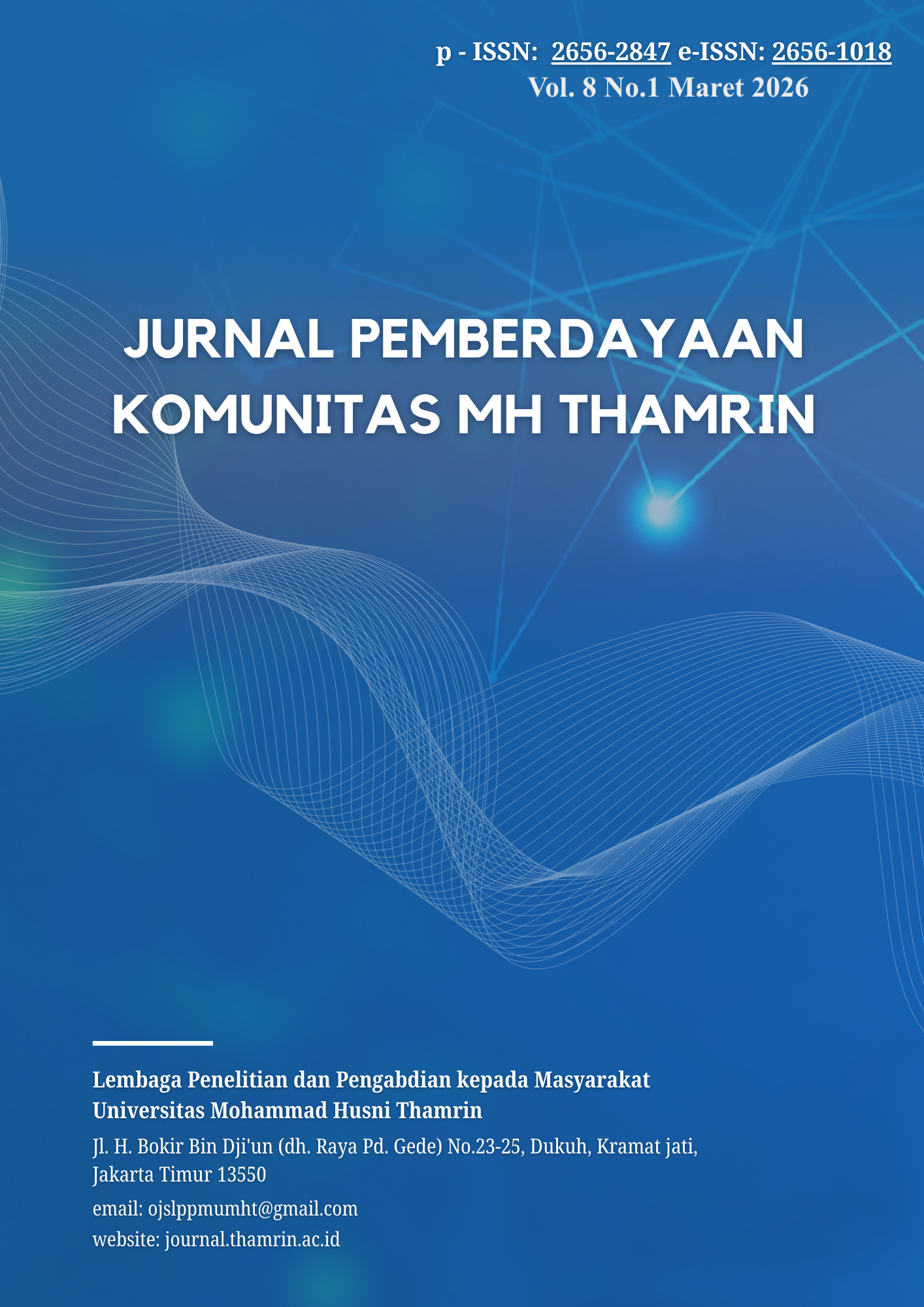
Downloads
Published
Issue
Section
Citation Check
License
Copyright (c) 2026 Ummi Zakiyah Diyanah, Iskandar Syukur, Sisca Novalia

This work is licensed under a Creative Commons Attribution 4.0 International License.
Jurnal Pemberdayaan Komunitas MH Thamrin allows readers to read, download, copy, distribute, print, search, or link to the full texts of its articles and allow readers to use them for any other lawful purpose. The journal allows the author(s) to hold the copyright without restrictions. Finally, the journal allows the author(s) to retain publishing rights without restrictions Authors are allowed to archive their submitted article in an open access repository Authors are allowed to archive the final published article in an open access repository with an acknowledgment of its initial publication in this journal.

Lisensi Creative Commons Atribusi 4.0 Internasional.