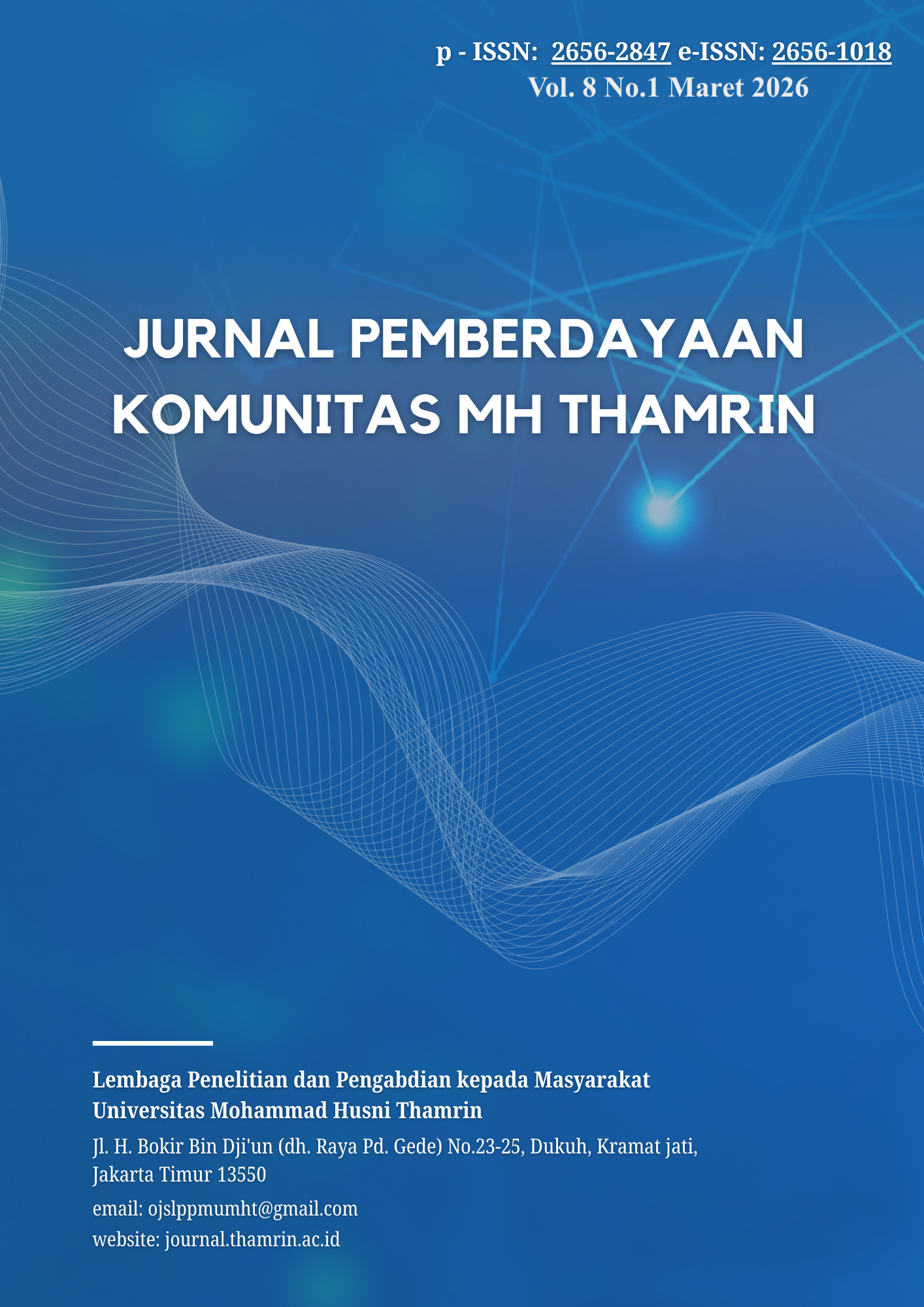
Well-Being-Based Leadership: School Principals' Strategies in Maintaining Teachers' Mental Health at SDN 1 SANGGU
DOI:
https://doi.org/10.37012/jpkmht.v8i1.3423Abstract
This study aims to explore the impact of well-being-based leadership on teacher mental health at SDN 1 SANGGU. Using a mixed-methods approach, the research combines quantitative and qualitative methods to measure the direct influence of leadership on teacher mental health. Quantitative data were collected through a questionnaire measuring teachers' perceptions of school leadership, while qualitative data were gathered through semi-structured interviews with three teachers. The results show that well-being-based leadership has a significant positive impact on teacher mental health, both directly through emotional support and workload management. The study suggests that school principals should implement leadership styles that prioritize teacher well-being to create a healthier and more productive work environment. Although many studies have examined the role of leadership in influencing the quality of teachers' work, few explicitly examined the direct impact of well-being-based leadership on teachers' mental health. This research is important to fill the knowledge gap on how school principals can systematically support teachers' mental well-being through a more holistic leadership approach. A blended approach that uses quantitative and qualitative methods is needed to provide a more comprehensive understanding of the impact of well-being-based leadership. This study aims to explore and measure the impact of well-being-based leadership strategies on teachers' mental health at SDN 1 SANGGU. Using quantitative methods, this study will measure the direct influence of well-being-based leadership on mental health variables such as stress, emotional fatigue, and teacher job satisfaction.
Downloads
Published
Issue
Section
Citation Check
License
Copyright (c) 2026 Harjuni, Unik Ambar Wati, Anwar Novianto, Nurtanio Agus Purwanto, Resky Nuralisa Gunawan

This work is licensed under a Creative Commons Attribution 4.0 International License.
Jurnal Pemberdayaan Komunitas MH Thamrin allows readers to read, download, copy, distribute, print, search, or link to the full texts of its articles and allow readers to use them for any other lawful purpose. The journal allows the author(s) to hold the copyright without restrictions. Finally, the journal allows the author(s) to retain publishing rights without restrictions Authors are allowed to archive their submitted article in an open access repository Authors are allowed to archive the final published article in an open access repository with an acknowledgment of its initial publication in this journal.

Lisensi Creative Commons Atribusi 4.0 Internasional.